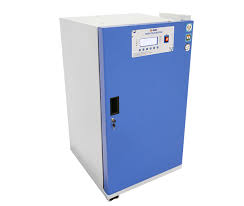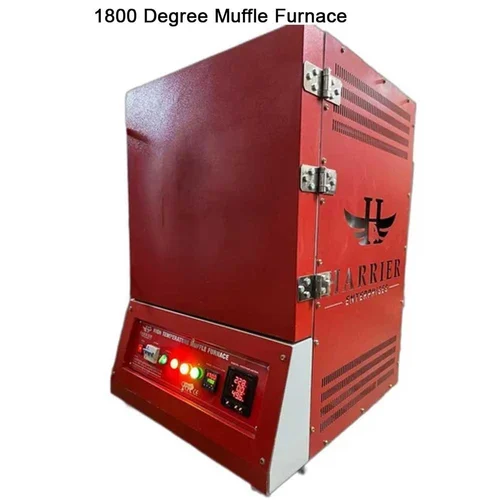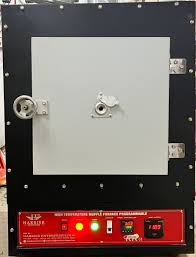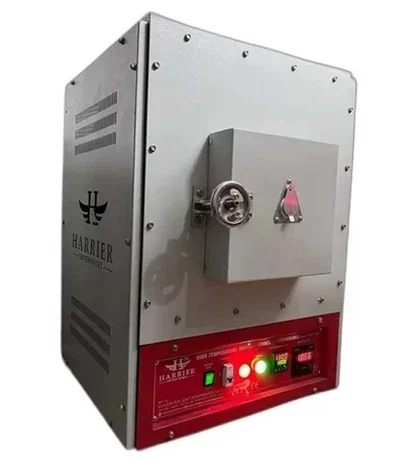
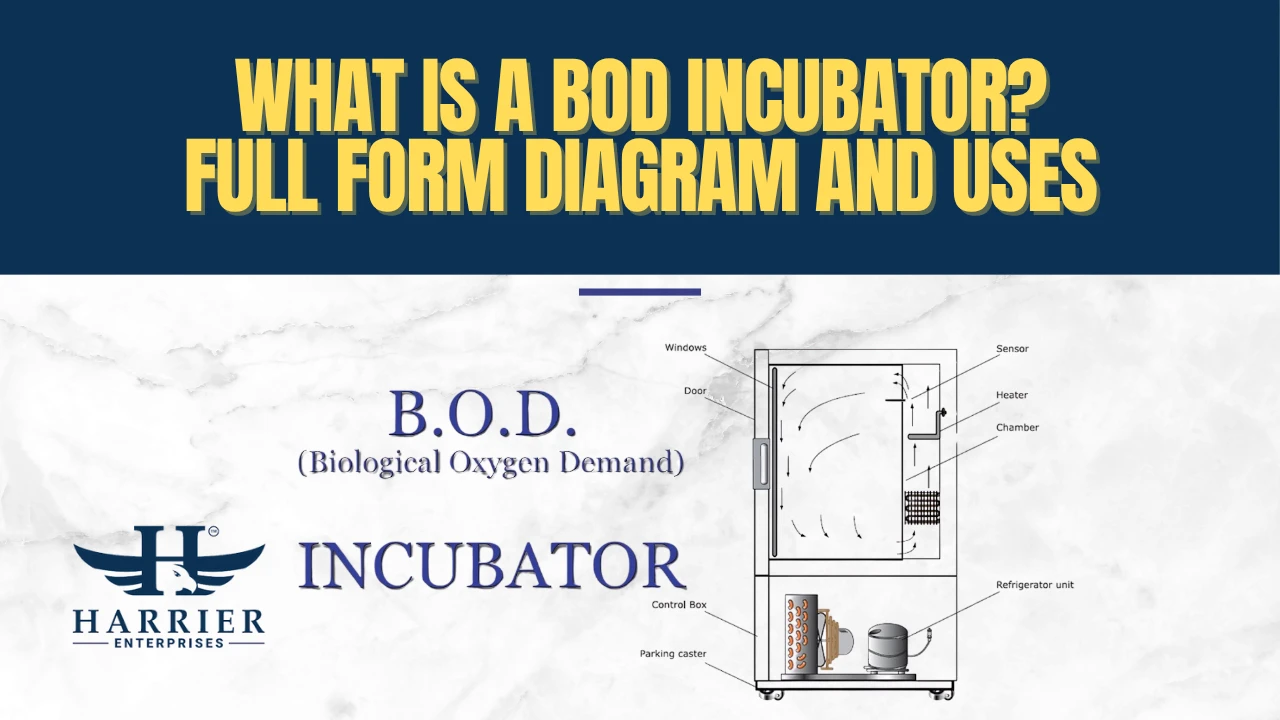
A BOD Incubator, also known as a Biochemical Oxygen Demand Incubator, is a specialized laboratory instrument designed to maintain stable temperature conditions for biochemical and biological experiments. It is primarily used for BOD testing, which measures the amount of oxygen consumed by microorganisms in a water sample over a specific period.
BOD incubators are widely used in plant and animal tissue culture, biomass estimation, microbial ecology studies, and various research applications. This blog will explore the key uses and importance of BOD incubators across different industries and explain why they are essential equipment for accurate and reliable testing.
Full Form of BOD
The full form of BOD is Biochemical Oxygen Demand.
It refers to the amount of oxygen required by microorganisms to break down organic matter present in water or sewage. The BOD Incubator helps maintain the required conditions to measure this demand accurately over a set period, usually 5 days at 20°C.
What is a BOD Incubator?
A BOD Incubator is a laboratory device designed to provide a controlled temperature environment for the incubation of biological samples. It is mainly used to test the Biochemical Oxygen Demand (BOD) of water and wastewater, which helps determine the level of organic pollution.
The incubator ensures stable and uniform temperature conditions so that microorganisms can act on organic materials in the sample, helping analysts measure how much oxygen is consumed.
Diagram of BOD Incubator
The BOD Incubator provides controlled environmental conditions ideal for biological and biochemical research, especially for BOD testing. It is designed to maintain a constant temperature, usually around 20°C, ensuring accurate and reliable results.
A typical BOD incubator consists of an insulated outer body and a stainless-steel inner chamber to ensure uniform temperature distribution. An air-circulating fan keeps the air evenly mixed inside the chamber, while heating and refrigeration systems work together to maintain the desired temperature.
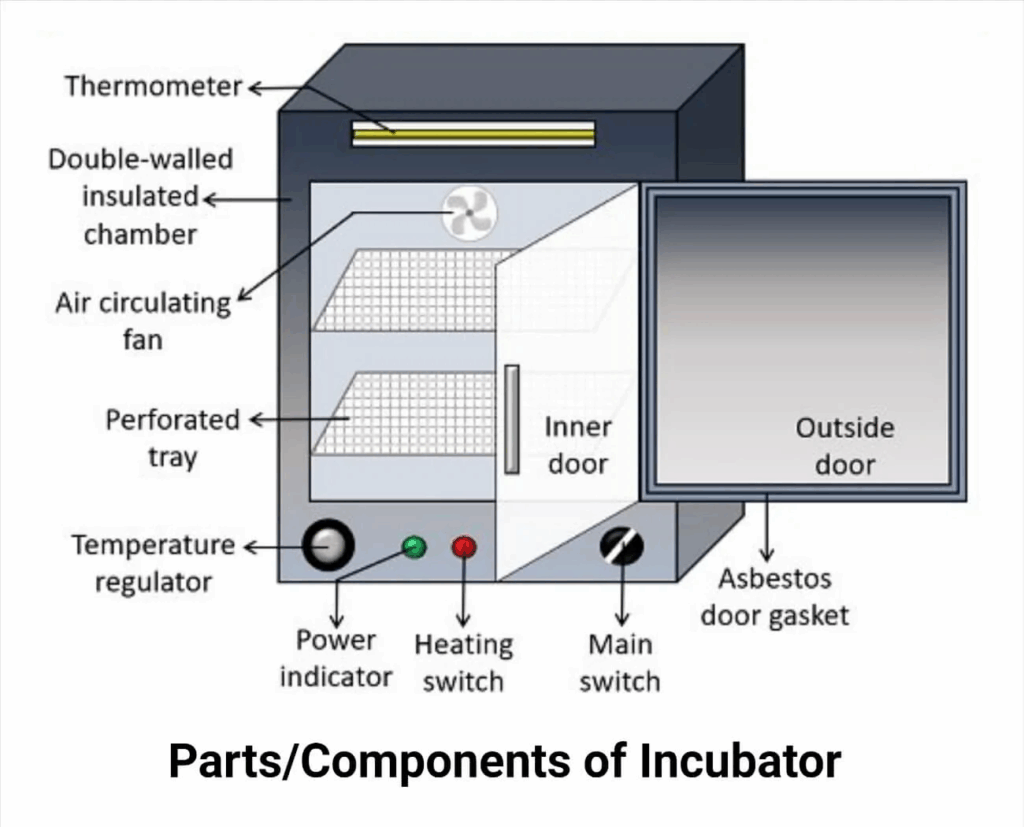
The incubator also includes digital temperature control components for precision, along with safety features like a thermostat to prevent overheating and a locking door to ensure system stability and prevent external temperature interference.
Main Components and Their Functions:
- Outer Body: The outer chamber is made of mild steel or stainless steel with powder coating. It protects the unit from corrosion and gives structural strength.
- Inner Chamber: The inner compartment is made of stainless steel and is well insulated to maintain uniform temperature throughout the chamber.
- Insulation: A thick layer of PUF (Polyurethane Foam) insulation is placed between the inner and outer walls to prevent heat loss or temperature fluctuations.
- Shelves: Multiple removable trays or shelves are provided inside the chamber to hold BOD bottles or samples neatly during incubation.
- Door with Glass Window: The door is tightly sealed and often has a double-glass viewing window, allowing users to observe samples without disturbing the internal temperature.
- Cooling System: A refrigeration unit (compressor and condenser) keeps the temperature low and constant, which is vital for maintaining the 20°C environment.
- Heating System: Electric heating elements are used for temperature control, especially when the ambient temperature drops below the set point.
- Air Circulation Fan: A fan or air blower ensures uniform air distribution inside the chamber for consistent temperature in all corners.
- Temperature Controller: A digital PID temperature controller displays and maintains the desired temperature precisely, preventing fluctuations.
- Power Switch and Indicators: Located on the control panel, these indicate power status and operation mode.
Uses of BOD Incubator
A BOD Incubator plays a vital role in biological, environmental, and industrial laboratories, providing controlled temperature conditions for microbial growth and biochemical reactions. Below are the detailed uses and applications of a BOD Incubator:
1. BOD Testing (Biochemical Oxygen Demand Measurement)
The primary use of a BOD Incubator is to determine the Biochemical Oxygen Demand of water or wastewater. This test measures the amount of oxygen microorganisms consume while decomposing organic matter in water over a set period (usually 5 days at 20°C).
- Helps assess the pollution level in water bodies.
- Determines the efficiency of sewage and effluent treatment plants (STP/ETP).
- Aids in environmental monitoring and maintaining regulatory compliance.
2. Wastewater and Effluent Testing
Industries use BOD incubators to analyze the organic load in wastewater before and after treatment.
- Ensures the treated water meets pollution control standards.
- Supports process optimization in water treatment facilities.
- Helps in maintaining eco-friendly discharge from industrial plants.
3. Microbial Culture Growth
BOD incubators provide an ideal environment for microbial culture development under controlled temperature conditions.
- Used in microbiology labs to study bacterial and fungal growth.
- Important for research in environmental microbiology and biotechnology.
4. Plant and Animal Tissue Culture
The stable temperature inside a BOD incubator supports plant and animal cell growth for laboratory studies.
- Used in agriculture, genetics, and biological research.
- Facilitates controlled growth for tissue culture experiments.
5. Biomass and Enzyme Studies
BOD incubators help in studying biomass production and enzyme activity under specific temperature-controlled conditions.
- Ideal for biochemical and molecular biology experiments.
- Assists in determining optimal growth conditions for enzymes and microorganisms.
6. Microbial Ecology and Environmental Studies
In ecological studies, BOD incubators are used to simulate natural conditions for observing microbial behavior, decomposition rates, and ecosystem responses to different temperatures.
7. Research and Quality Control Laboratories
BOD incubators are essential in academic, industrial, and research labs for performing experiments that require stable temperature settings.
- Used in pharmaceutical testing, food processing, and biotechnology industries.
- Ensures accurate and reproducible results in quality testing.
BOD Incubator Temperature
The BOD Incubator is specifically designed to maintain a constant and precise temperature that supports the growth and activity of microorganisms during testing.
The standard temperature for BOD testing is 20°C ± 1°C, maintained continuously for a period of 5 days (commonly known as the BOD₅ test). This temperature provides ideal conditions for microbial decomposition of organic matter present in water or wastewater samples.
Difference Between Bacteriological Incubator and BOD Incubator
Both Bacteriological Incubators and BOD Incubators are essential laboratory instruments used to grow and maintain microorganisms under controlled temperature conditions. However, they differ in purpose, temperature range, and applications.
| Feature | Bacteriological Incubator | BOD Incubator |
|---|---|---|
| Full Form | — | Biochemical Oxygen Demand Incubator |
| Purpose | Used for the growth and maintenance of bacteria at body temperature. | Used to determine the Biochemical Oxygen Demand (BOD) of water and wastewater samples. |
| Temperature Range | Operates typically between 25°C to 60°C. | Maintains a constant low temperature of 20°C ± 1°C. |
| Temperature Control System | Equipped with heating elements only (no cooling system). | Contains both heating and cooling systems to maintain low, stable temperatures. |
| Applications | Used in microbiology, pathology, and pharmaceutical labs for bacterial culture. | Used in environmental and wastewater testing labs for BOD analysis. |
| Air Circulation | Natural or forced air circulation for even heating. | Uses an air-circulating fan to ensure uniform temperature distribution. |
| Construction | Double-walled with insulation and heating system only. | Double-walled with PUF insulation, heating, and refrigeration units. |
| Test Duration | Usually short-term incubation (hours to a couple of days). | Long-term incubation, typically 5 days for BOD₅ testing. |
| Temperature Requirement | Requires higher temperatures (around 37°C) for bacterial growth. | Requires lower temperatures (around 20°C) for microbial oxygen demand studies. |
| Example Use | Growing E. coli or other bacteria for medical and research purposes. | Measuring organic pollution in sewage or industrial effluent. |
Advantages of BOD Incubator
- Precise Temperature Control: Maintains a stable temperature (usually 20°C ± 1°C), ensuring accurate and consistent BOD test results.
- Ideal for Biological Studies: Provides optimal conditions for microbial growth and biochemical reactions, useful in environmental and research laboratories.
- Dual Function (Heating & Cooling): Equipped with both heating and refrigeration systems to maintain a constant temperature regardless of external conditions.
- Uniform Air Circulation: Built-in fans ensure even temperature distribution throughout the chamber for reliable sample incubation.
- Wide Range of Applications: Useful in water testing, microbial ecology, wastewater treatment, and biotechnology research.
- Safety Features: Includes thermostats, overload protection, and locking doors to maintain safety and prevent temperature fluctuations.
Disadvantages of BOD Incubator
- Limited Temperature Range: Mostly operates at lower temperatures (5°C–60°C); not suitable for applications requiring higher incubation temperatures.
- High Initial Cost: Advanced models with digital controllers and refrigeration systems can be expensive for small laboratories.
- Requires Regular Maintenance: Cooling compressors and sensors need periodic servicing to ensure accurate temperature control.
- Large Space Requirement: Laboratory setup may require adequate space and proper ventilation for larger incubator models.
- Power Dependency: Continuous operation needs a stable power supply; fluctuations may affect test accuracy.
How to Choose the Right BOD Incubator for Your Needs
- Temperature Range: Choose an incubator that maintains a stable 20°C ± 1°C for accurate BOD testing.
- Capacity: Select the size based on your sample load and laboratory space.
- Temperature Control System: Look for digital PID controllers for precise and reliable temperature regulation.
- Construction Quality: Prefer models with stainless steel inner chambers and good insulation for durability.
- Air Circulation: Ensure it has an air-circulating fan for uniform temperature distribution.
In conclusion, a BOD Incubator is an indispensable tool for laboratories and industries that require precise and reliable temperature control for biological and environmental testing. It is primarily used to accurately measure Biochemical Oxygen Demand (BOD) and assess other vital parameters such as microbial activity and sample stability.
By utilizing this equipment, organizations can ensure consistent product quality, meet regulatory standards, and maintain smooth, uninterrupted operations. As technology continues to evolve, BOD incubators will play an even greater role in improving testing efficiency and industrial productivity.
Harrier Enterprise stands out as a leading Laboratory Incubator manufacturer, offering durable, energy-efficient, and technologically advanced solutions designed to deliver accurate performance for diverse industrial and research applications.