Muffle Furnace: Uses, Working Principles & Important Benefits
A muffle furnace is an essential tool in laboratories and industrial settings for various thermal processing tasks. Whether you’re dealing with material testing, ashing, sintering, or heat treatment, a muffle furnace plays a critical role in achieving precise, controlled heating. In this blog, we’ll explore its uses, working principles, and the key benefits of using a muffle furnace.
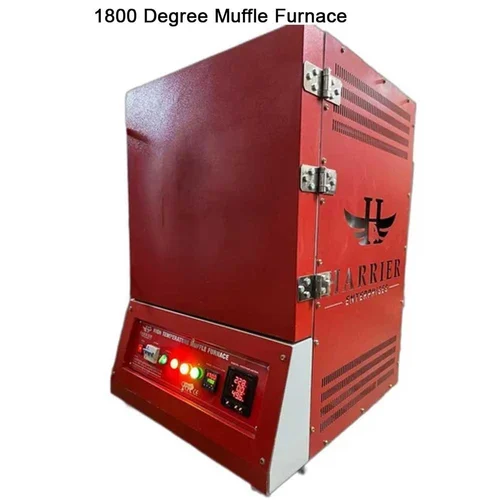
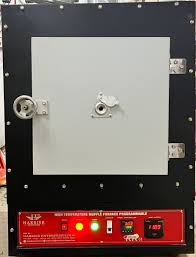
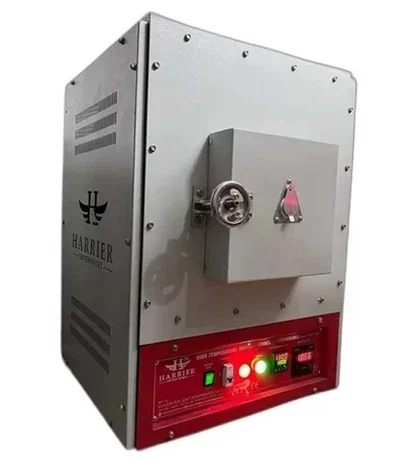
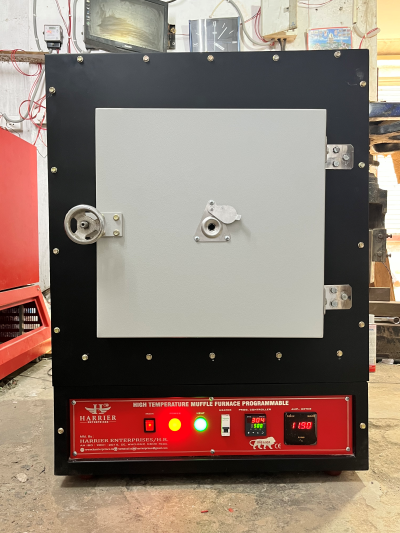
A muffle furnace is a type of high-temperature oven used to heat materials in a controlled, oxygen-free environment. The furnace consists of an insulated chamber (the muffle) where the material is heated, and the chamber is typically separated from the combustion zone to prevent direct contact with flames. This design ensures that materials are heated uniformly and safely, making it ideal for applications that require high precision.
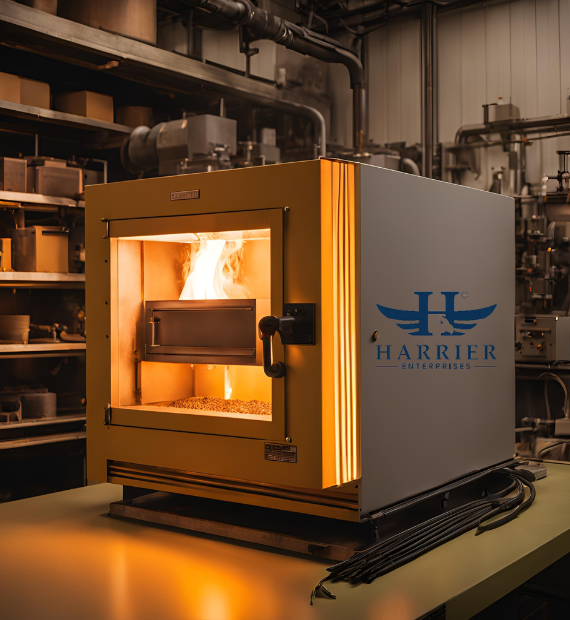
Muffle Furnace Applications
A muffle furnace is widely used for high-temperature heating in laboratories and industries. Its key applications include:
- Laboratory Analysis – Ash content determination, sample preparation, and loss-on-ignition tests
- Heat Treatment – Annealing, tempering, and hardening of metals
- Ceramics & Glass – Sintering, firing, and melting
- Chemical & Pharmaceutical – Calcination, drying, and thermal decomposition
- Research & Development – Controlled heating for experiments and material testing
Use of Muffle Furnace
A muffle furnace is a high-temperature heating device widely used in laboratories, research centers, and industries. It is designed to provide uniform, precise, and contamination-free heating by enclosing the material inside an insulated chamber, preventing direct contact with the flame or heating elements. Its versatility and reliability make it an essential tool for various applications.
Muffle Furnace Uses:
- Ash Content Determination: Uses of Muffle furnaces in laboratory to determine the ash content in coal, food, rubber, plastics, and other materials. The furnace burns off organic matter, leaving only the ash for analysis.
- Heat Treatment: It is used for annealing, tempering, and hardening of small metal components. The controlled heating ensures improved mechanical properties and durability of metals.
- Material Testing: Muffle furnaces are ideal for sample preparation, gravimetric analysis, and loss-on-ignition tests. Researchers and quality control labs rely on them for precise results.
- Ceramics and Glass Industry: They are extensively used for sintering, firing, and melting processes in ceramics, glass, and porcelain industries, ensuring uniform heat distribution for consistent product quality.
- Chemical and Pharmaceutical Applications: Muffle furnaces are used for calcination, drying, and thermal decomposition of chemical and pharmaceutical substances, making them critical for industrial processing.
- Research & Development: In R&D labs, muffle furnaces provide a controlled high-temperature environment for various experiments, helping scientists and engineers develop new materials and products.
- Environmental & Industrial Testing: They are used for testing soil, waste, and industrial by-products to analyze composition and perform controlled burning experiments.
Muffle Furnace Use: Advantages
- Precise and uniform temperature control
- Contamination-free heating
- High reliability and energy efficiency
- Suitable for both industrial and laboratory applications
In conclusion, a muffle furnace is a versatile and indispensable tool for laboratories, industries, and research centers that require accurate and controlled high-temperature heating for testing, processing, and development purposes.
Muffle Furnace Woking Principle
The working principle of muffle furnace is based on the controlled heating of materials in a temperature-regulated, oxygen-free environment. Here’s how it works:
Heating Process: The furnace consists of a heating element, often made from materials like kanthal or nichrome, which generates heat when electrical current flows through it. This heat is evenly distributed inside the furnace chamber.
Temperature Control: The muffle furnace uses a temperature controller, typically connected to a digital or analog thermometer, to set the desired temperature. Modern muffle furnaces come with programmable controllers, allowing users to set precise heating cycles (including ramp-up rates, hold times, and cooling periods).
Muffle Chamber: The furnace’s interior chamber, or “muffle,” is insulated to contain the heat and protect the material inside. The chamber prevents the sample from direct exposure to combustion gases, ensuring an oxygen-free environment for processes like ashing or sintering.
- Exhaust System: Some muffle furnaces are equipped with an exhaust system to vent out gases generated during the heating process, ensuring safety and maintaining optimal conditions inside the furnace.
Muffle Furnace Price
Muffle furnaces are indispensable tools in industries, offering controlled heating, uniform temperature distribution, and precise process management. Whether you’re working in a laboratory, research facility, or industrial setting, the versatility and reliability of a muffle furnace make it an essential investment for high-temperature applications.
The price of a muffle furnace depends on several key factors, as it is designed for different laboratory and industrial applications. Some important factors like size and capacity, temperature range, Build quality & materials, types of furnace, automation and control, customization expect these factors some market factors also affect the Muffle Furnace price.
If you’re looking for a high-quality muffle furnace, consider factors like temperature range, control options, and the types of processes you plan to use it for. Investing in the right equipment can significantly enhance the efficiency and accuracy of your operations.