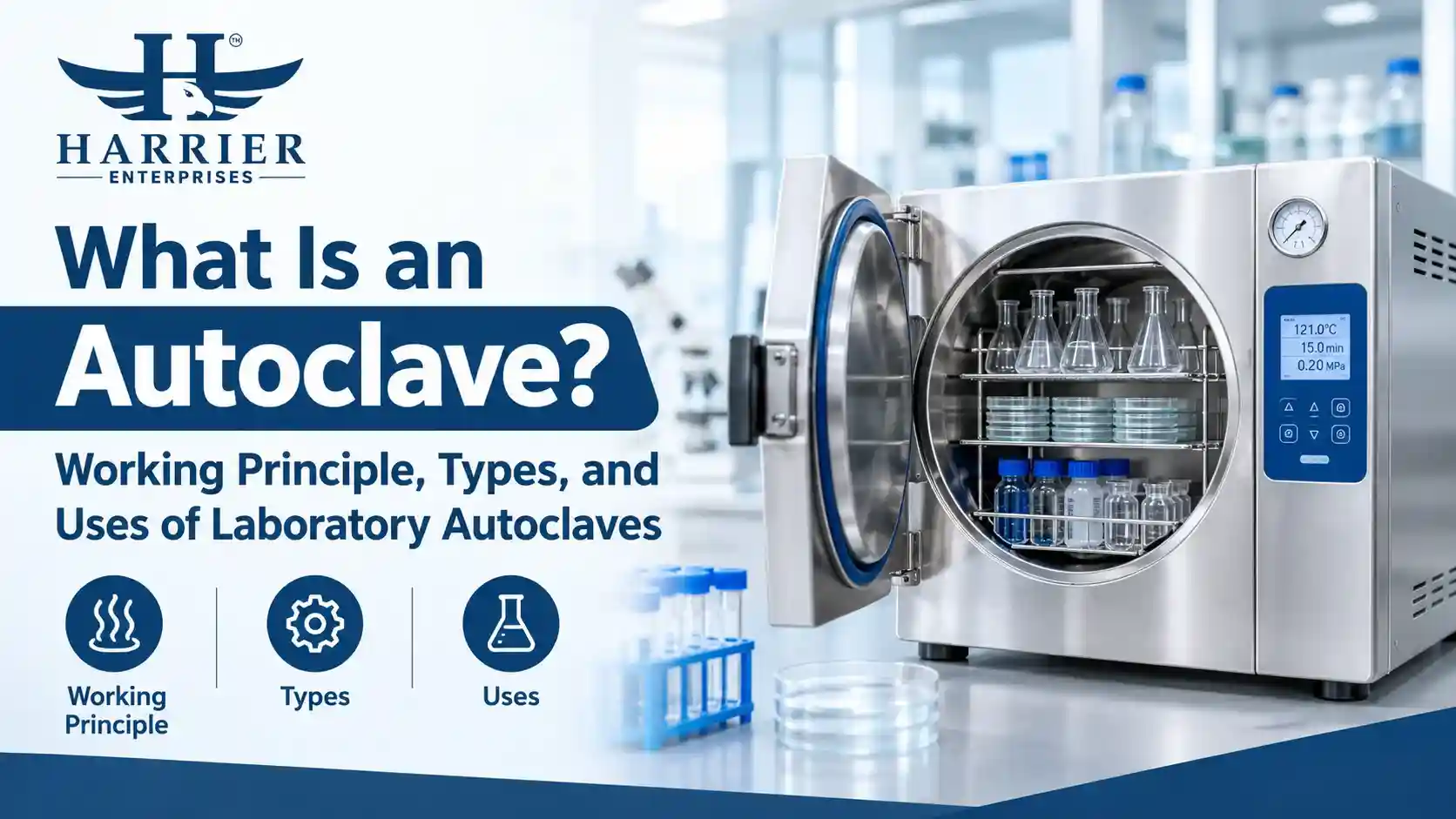
An autoclave is an essential piece of equipment used for sterilization in laboratories, hospitals, pharmaceutical industries, research centres, and medical facilities. It uses high-pressure saturated steam to destroy bacteria, viruses, fungi, and other microorganisms, including resistant bacterial spores. Autoclaves help maintain hygienic working conditions and reduce the risk of contamination during laboratory procedures.
Harrier Enterprises provides laboratory equipment designed to support the requirements of laboratories, educational institutions, research facilities, and industrial applications. Understanding the working principle, types, and uses of an autoclave helps industrial users select suitable equipment according to their sterilization requirements.
What Is an Autoclave?
An autoclave is a sterilization machine that uses saturated steam under pressure at a controlled temperature for a specified period. It is commonly used to sterilize laboratory glassware, surgical instruments, culture media, reusable equipment, and other heat-resistant materials.
Ordinary boiling may not destroy all bacterial spores, steam sterilization under appropriate conditions can achieve a higher level of microbial destruction. Common sterilization cycles use temperatures such as 121°C or 134°C, depending on the load, equipment, and validated cycle requirements.
Autoclaves are available in different sizes and configurations, from compact tabletop units for small laboratories to large-capacity machines for hospitals and industrial facilities.
What Is the Working Principle of an Autoclave?
The working principle of an autoclave is based on moist heat sterilization using saturated steam under pressure. Pressure allows steam to reach temperatures above the normal boiling point of water, enabling effective heat transfer to the materials being sterilized.
When saturated steam comes into contact with a cooler surface, it condenses and releases latent heat. This heat penetrates the load and helps destroy microorganisms by denaturing essential proteins and disrupting their cellular structures.
How Does a Laboratory Autoclave Work?
The sterilization process generally involves the following steps:
1. Loading the Materials
Laboratory instruments, glassware, culture media, or other compatible materials are placed inside the sterilization chamber. Items must be arranged to allow steam to circulate properly.
2. Air Removal
Air is removed from the chamber to help steam reach all required surfaces. Depending on the autoclave design, this may happen through gravity displacement or a vacuum system.
3. Steam Generation
The machine generates or receives steam and introduces it into the chamber. The chamber temperature and pressure rise to the required operating conditions.
4. Sterilization Cycle
The autoclave maintains the required temperature for a validated holding time. A common cycle for suitable laboratory loads is 121°C for around 15–20 minutes after the load reaches the target conditions. Actual cycle requirements vary according to the load, packaging, and equipment instructions.
5. Exhaust and Cooling
After the holding period, the chamber releases pressure in a controlled manner. The load is allowed to cool, and liquids may require additional cooling time before they can be safely handled.
6. Unloading and Verification
Once the cycle is complete and the load is safe to handle, the materials are removed. Physical cycle records, chemical indicators, and appropriate biological indicators can be used to verify sterilization performance.
Types of Laboratory Autoclaves
Different types of autoclaves are designed to handle specific sterilization needs.
1. Gravity Displacement Autoclave
A gravity displacement autoclave uses incoming steam to displace air from the chamber. It is commonly used for suitable laboratory glassware, unwrapped instruments, and certain liquid loads. Its effectiveness depends on proper air removal and the nature of the materials being sterilized.
2. Vacuum Autoclave
Vacuum autoclave uses a vacuum system to remove air before steam enters the chamber. This helps steam penetrate porous materials, wrapped instruments, and complex equipment more effectively. It is commonly used in healthcare and advanced laboratory settings.
3. Tabletop Autoclave
Tabletop autoclaves are compact machines suitable for laboratories, clinics, dental practices, and educational institutions with relatively low sterilization volumes. They require less installation space and are useful for routine sterilization tasks.
4. Vertical Autoclave
Vertical autoclave generally has a top-loading chamber and is commonly used in research laboratories, microbiology laboratories, colleges, and industrial testing facilities. Depending on its design and capacity, it can be used for sterilizing culture media, laboratory glassware, and compatible instruments.
5. Horizontal Autoclave
Horizontal autoclave has a front-loading chamber and is available in medium- to large-capacity configurations. It is suitable for facilities that need to process larger quantities of materials or require a specific loading arrangement.
Main Components of an Autoclave
An autoclave consists of several components that work together to provide controlled and reliable sterilization.
- Sterilization Chamber: Holds the materials during the sterilization cycle and withstands the required operating conditions.
- Steam Generator or Heating System: Produces steam or supplies the heat needed to generate it.
- Pressure and Temperature Sensors: Monitor operating conditions inside the machine.
- Control Panel: Allows operators to select and monitor sterilization cycles.
- Safety Valve: Helps protect the equipment against excessive pressure.
- Door Locking Mechanism: Prevents unsafe opening while hazardous pressure conditions remain.
- Exhaust System: Controls the release of steam and pressure at the end of the cycle.
- Gaskets and Seals: Help maintain a proper seal around the chamber door.
Uses of Laboratory Autoclaves
Autoclaves are used across many sectors where effective sterilization is essential.
Pharmaceutical Industry
Autoclaves sterilize compatible equipment, laboratory tools, and selected materials used in pharmaceutical research and production. The cycle must be validated for the specific load and process.
Microbiology Laboratories
They are used to sterilize culture media, reusable laboratory glassware, and suitable laboratory waste before disposal in accordance with applicable procedures.
Hospitals and Healthcare Facilities
Healthcare autoclaves are used to sterilize compatible reusable medical instruments and equipment. The cycle is selected according to the instrument manufacturer’s instructions.
Research and Educational Institutions
Research laboratories, colleges, and universities use autoclaves for routine sterilization and microbiological research activities.
Food and Biotechnology Industries
Autoclaves support sterilization processes for compatible containers, laboratory media, and selected materials used in testing and biotechnology applications.
Benefits of Using a Laboratory Autoclave
Autoclaves offer several important advantages when correctly selected, operated, and maintained.
- Effective Sterilization: Properly validated steam cycles can destroy a wide range of microorganisms, including bacterial spores.
- Reliable Performance: Automated controls help maintain the required temperature, pressure, and holding time.
- Wide Range of Applications: Different models can accommodate glassware, instruments, culture media, and other compatible materials.
- Reduced Chemical Dependence: Steam sterilization can reduce the need for chemical sterilants for suitable applications.
- Repeatable Cycles: Programmable settings and cycle records help improve process consistency.
- Support for Laboratory Safety: Proper sterilization procedures help reduce contamination risks and support safe laboratory practices.
Important Factors to Consider When Selecting an Autoclave
Before purchasing an autoclave, laboratories should assess their daily workload, the materials to be sterilized, and their operating requirements.
Chamber Capacity: Choose a chamber size that accommodates the volume and dimensions of the materials processed during each cycle.
Temperature and Pressure Range: Confirm that the machine supports the validated cycle conditions required for the intended application.
Control System: Look for suitable temperature and pressure monitoring, cycle selection, alarms, and cycle-recording features.
Loading Arrangement: Consider whether a vertical, horizontal, or tabletop design is appropriate for the available space and the type of load.
Safety Features: Check for appropriate door interlocks, pressure protection, and over-temperature safeguards.
Maintenance and Service: Consider the availability of spare parts, technical support, routine maintenance, and calibration services.
Compliance Requirements: Select equipment that meets the applicable standards and regulatory requirements for the intended use.
Why Choose Harrier Enterprises for Laboratory Equipment?
Harrier Enterprises a well recognized name for manufacturing Hydrothermal laboratory autoclave equipment and heating elements supports laboratory equipment requirements across different applications. When selecting an autoclave or related laboratory equipment, it is important to consider the intended use, required capacity, operating conditions, and safety features.
The right equipment selection can help laboratories maintain consistent sterilization practices, reduce contamination risks, and support day-to-day research and testing activities. If you are looking to purchase autoclaves, you should confirm the available models, specifications, installation requirements, and after-sales support with Harrier Enterprises before making a purchase.